


Exodus 90: Catholic Men's App
Exodus 90
I approached Exodus 90: Catholic Men's App as a reading and formation tool rather than as an ordinary devotional library. It sits in the Books & Reference category, is developed by Exodus 90, and is built around a demanding Catholic practice for men. The current focus is joining the Exodus 90 Brotherhood for St. Michael's Lent starting August 12, 2026, so the experience is tied to a defined spiritual season instead of being an open-ended collection of unrelated texts.
That distinction matters when deciding whether it belongs on your phone. I found the app most appealing for someone who wants structure, shared commitment, and a serious daily rhythm. It is less convincing for a reader who simply wants occasional Catholic reading, a quiet prayer book, or a flexible reference tool that can be used without committing to a particular program. My review focuses especially on how comfortably the app can be read and followed in different situations, because a demanding spiritual routine only works when the practical interface does not become an unnecessary obstacle.
How the reading experience supports a focused spiritual routine
Readability and navigation during a daily practice
The strongest part of the concept is its sense of direction. Instead of asking me to browse a large shelf of material and decide what to do every morning, the app points toward a particular path. That can reduce decision fatigue, especially when I am tired or distracted. A structured program also makes it easier to understand the purpose of opening the app: I am not merely looking for an interesting paragraph, but returning to a practice that is meant to shape the day.
For a user with limited attention, that focused approach can be more useful than a conventional Catholic reading app filled with books, saints, prayers, and search results. A broad library gives freedom, but it also creates choices. Exodus 90 is more intentional. I would recommend opening it at a consistent time, reading the assigned material before checking messages, and treating the app as the first step in a repeatable routine rather than as something to browse whenever convenient.
The trade-off is that a guided path can feel restrictive. If I want to jump between Scripture, historical commentary, and devotional topics according to my mood, a general-purpose reference app is likely a better fit. This app makes more sense when the program itself is the priority. Its value comes from following a framework, not from giving me the broadest possible collection of Catholic resources.
Related News

Why WhatsApp Messenger Still Makes Everyday Communication Feel Easy

Jurassic World: The Game Is the Better Dino Tycoon for Strategic Players

Threads in Real Life: Who Should Join, Lurk, or Leave

How SHEIN Turned Shopping Into an Endless Content Feed

How to Make Fortnite Feel Smarter on Mobile

Should You Switch to Microsoft Outlook on Mobile?
The app is free to install, which makes trying the basic experience relatively approachable. It also carries an Everyone content rating, an important reassurance for households where age classification matters. At the same time, in-app purchases range from ten dollars to ninety dollars per item, so I would look carefully at each purchase screen before making a commitment. The free entry point is useful, but it should not be confused with every part of the wider experience being cost-free.
Its audience is also signaled clearly by the name and purpose. This is a Catholic men's app, and the Brotherhood language suggests that the social and spiritual identity of the program is central. I would not recommend it to someone searching for a neutral meditation tool or a general Christian reading app. A clear audience can make an app feel welcoming to the people it serves, but it can also make the experience feel less relevant to anyone outside that audience.
Practical reading habits for different abilities
For readers who process text slowly, I would use the app in short sessions rather than trying to complete everything in one sitting. A phone screen can make dense spiritual material tiring, particularly when reading in bed, on public transport, or in a room with poor lighting. Increasing the device's text size, using a brighter display, and taking deliberate pauses can make the routine less demanding. These are phone-level adjustments rather than special capabilities I would attribute to the app itself, but they make a real difference.
Gallery
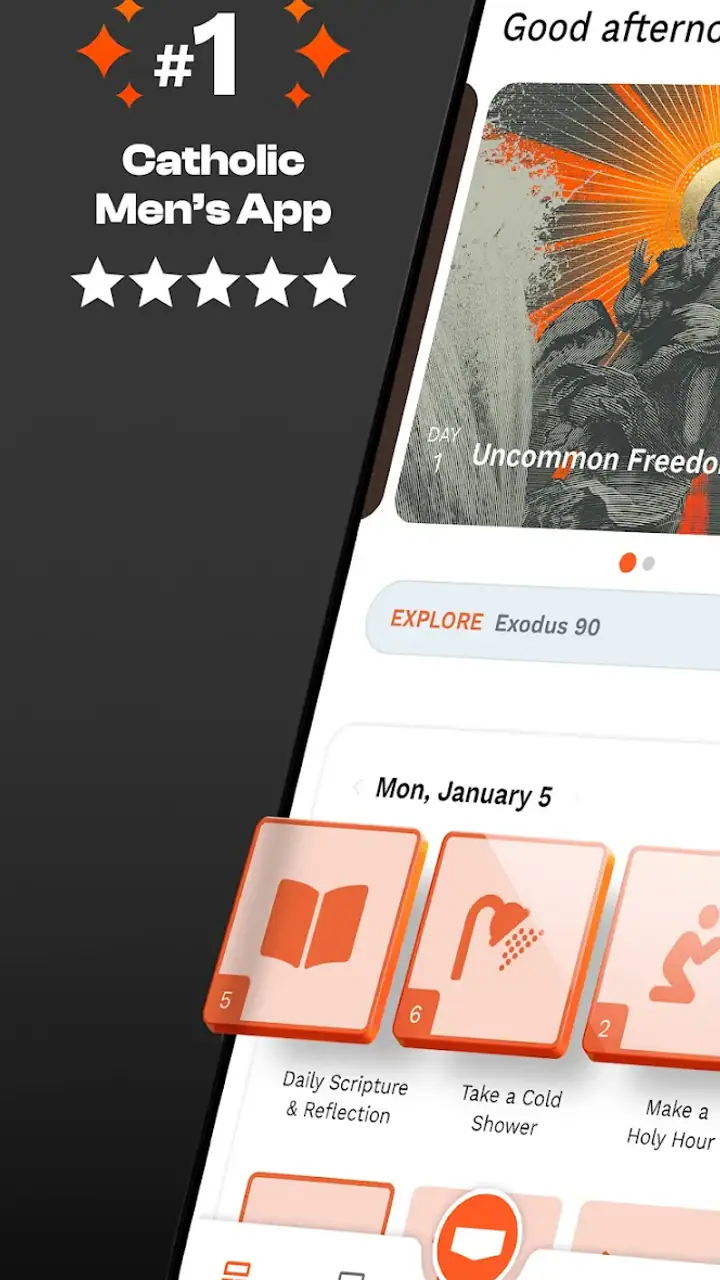
Users with dyslexia or other reading difficulties may benefit from copying a difficult passage into a preferred reading tool when that is practical, or from listening through the phone's own text-to-speech options if the operating system supports the relevant text selection. I would not assume that every screen will behave perfectly with those tools. The safest approach is to test one complete daily session before committing to a long program, paying attention to whether headings, controls, and reading content are easy to distinguish.
For people with low vision, the app's usefulness will depend heavily on how its text and controls respond to the device's display settings. Large system text can improve comfort, but it may also cause wrapping or make a page feel crowded. I prefer checking the first few screens with enlarged text before beginning the routine. If essential controls become difficult to locate, the app may create more friction than a printed prayer book or a dedicated accessible reading application.
That is one of the less obvious decisions here: the best format is not automatically the most digital one. A user who reads comfortably from paper may find that printing a short passage, when permitted for personal use, reduces eye strain and leaves the phone available only for the parts of the routine that require it. Someone else may prefer the phone because it keeps the material in one place. Exodus 90 works best when the technology supports the practice instead of becoming the practice.
Motor and sensory considerations in everyday use
People with limited dexterity may find repeated tapping, scrolling, or small controls tiring. I would set the phone on a stable surface rather than holding it throughout a reading session, and I would use the operating system's touch accommodations where available. A stylus can also help some users select compact interface elements more accurately. These adjustments do not change the spiritual content, but they can determine whether a daily routine feels sustainable after a long day.
One practical advantage of an app-based routine is that it can be used without carrying a separate book. That helps when traveling, commuting, or moving between home and work. The disadvantage is that the phone brings its own sensory distractions: notifications, bright icons, vibration, and the temptation to switch into another application. I recommend enabling a focus mode before opening the day's material. For users who are sensitive to visual clutter or interruptions, this small preparation may be more important than any individual reading feature.
Audio needs deserve similar attention. Some people absorb spiritual material more easily by listening than by reading, while others need visible text to maintain concentration. I would not assume that the app itself provides every audio option a user might want. If listening is essential because of blindness, fatigue, or a reading disability, test the app with the phone's accessibility services before relying on it as the main format. A familiar audio workflow outside the app may be more dependable for some users.
Noise is another everyday issue. A commuter may need headphones, while someone with auditory sensitivity may prefer silent reading. A parent using the app during a short break may not have a quiet room at all. The program's seriousness does not remove these ordinary constraints. I found it more realistic to plan a small, repeatable window than to wait for ideal silence. A routine that fits real life is more inclusive than one that assumes uninterrupted concentration.
Situational access: home, travel, and shared commitment
A realistic scenario would be a man who works early shifts and has only a few calm minutes before leaving home. He can prepare the phone the night before, switch off notifications, open the day's material, and read while sitting at the kitchen table. The app's structured purpose helps him avoid spending those minutes choosing among unrelated resources. If the session is interrupted, he can return later rather than abandoning the broader commitment.
Travel creates a different set of questions. A phone is convenient in an airport, hotel room, or train, but connectivity, battery life, and privacy can affect the experience. I would not wait until departure day to discover that a particular part of the routine is inconvenient away from home. Open the app in advance, understand the screens you need, charge the device, and keep a non-digital backup plan for the reading itself if that is important to you. This is especially sensible for users who cannot comfortably navigate a phone for long periods.
The Brotherhood angle may be valuable for someone who struggles to maintain a private habit alone. A shared identity can turn an isolated reading task into a commitment with meaning. On the other hand, users who prefer solitary devotion may find the emphasis on brotherhood less comfortable. I would choose the app for its communal framework only if that language feels motivating rather than pressuring. Spiritual discipline should be challenging, but the interface should not make a person feel that there is only one acceptable way to participate.
Families and mixed-ability households should also think about the audience carefully. The Everyone rating makes the app broadly suitable from a content-classification standpoint, but the program is specifically aimed at Catholic men. That means a household may need to distinguish between general device suitability and personal relevance. I would not install it for a younger family member simply because the age label is broad; the purpose and intended audience still matter.
For users managing fatigue, chronic pain, anxiety, or fluctuating concentration, consistency may need to look different from perfection. A long or demanding routine can become discouraging when a person misses a day because of health, work, or caregiving. Before beginning, I would decide what a realistic minimum session looks like and whether the program's expectations fit current circumstances. If the answer is no, a simpler daily prayer app or a printed devotional may provide a kinder and more sustainable starting point.
Remaining barriers and important trade-offs
The first barrier is commitment. This is not the app I would choose for casual browsing. Its identity is tied to a serious Catholic men's program and a particular Brotherhood experience, so users who are merely curious may find the structure heavier than expected. The store summary points toward St. Michael's Lent beginning on August 12, 2026, which gives the app a clear season of use but may feel less relevant if your timing or spiritual goals are different.
The second barrier is financial clarity. Installation costs nothing, yet individual in-app purchases can be priced between ten and ninety dollars. That spread is wide enough to make careful reading of purchase descriptions essential. I would begin with the free portion, identify exactly which part of the program I want, and avoid buying out of momentum. For a user on a tight budget, a parish resource, public-domain prayer book, or free reading app may offer more predictable value.
The third barrier is dependence on a personal device. Phones are portable, but they are not equally comfortable for everyone. Small targets, glare, battery anxiety, and notifications can interfere with prayer. A person with motor limitations may need more time to operate the app, while a person with sensory sensitivities may need to modify the phone before every session. If those adjustments are exhausting, a physical book or audio resource may be the better primary tool.
I also would not treat a high rating as proof that the app will suit every reader. It has an average rating of 4.7 from around 2.7 thousand ratings, and there are around 697 written reviews, which indicates a substantial group of satisfied users. Still, ratings usually reflect overall enjoyment rather than detailed accessibility or compatibility with a particular spiritual temperament. I see those numbers as encouraging, not as a substitute for testing the reading experience personally.
The app has passed the threshold of over 100 thousand installs, so it is not an obscure experiment with no visible audience. That scale can make trying it feel less risky, but it does not remove the need to check whether the program's language, pacing, and purchase model match your needs. I would especially encourage users who rely on assistive technology to test navigation before paying for anything.
Who should use it, and who should choose something else?
I would recommend Exodus 90 to a Catholic man who wants a defined spiritual challenge, appreciates a Brotherhood identity, and is willing to organize his day around a guided practice. It is particularly promising for someone who repeatedly downloads prayer resources but loses momentum because there is no clear next step. The app's focused structure can turn good intentions into a visible routine.
I would also consider it for a small group of friends who want to begin the same season together. Each person can establish a personal reading habit while still feeling connected to a larger purpose. The important condition is that the group should agree on realistic expectations. A demanding program becomes less useful when members compare their schedules, health, or concentration as though everyone had the same circumstances.
I would skip it if I wanted a broad Catholic encyclopedia, a general Bible reader, or a quiet app for occasional prayer. Those alternatives are better when discovery and flexibility matter more than a single disciplined path. I would also skip it if I strongly dislike spiritual programs aimed at a defined demographic, or if the possible in-app costs do not fit my budget. A free installation alone is not enough reason to choose a program whose deeper experience may involve purchases.
My most useful tip is to treat the first session as an accessibility trial. Read with your normal text size, then with larger text; try the device's voice features if you need them; use the app in both a quiet room and a mildly distracting setting; and check whether the controls remain manageable when your hands are tired. This reveals more than a quick glance at the store page. If the routine remains comfortable under those conditions, it has a better chance of surviving ordinary life.
My inclusive verdict
Exodus 90 is a focused Catholic formation app with a clear audience and a strong sense of purpose. I like that it does not pretend to be everything for everyone. Its structure can help me begin a serious routine without wandering through endless choices, and the Brotherhood framing may give the experience extra motivation. The free installation and Everyone rating make the initial step approachable, while the developer's established audience suggests that many users find the concept worthwhile.
Its inclusive value is more conditional. The app can fit different reading speeds, visual needs, work schedules, and travel situations when the user adjusts the phone and plans the routine thoughtfully. But I would not assume that those adjustments will be equally easy for everyone, and I would not rely on it blindly when text-to-speech, enlarged controls, or low-distraction use are essential. The purchase range also deserves attention before anyone commits.
My final recommendation is simple: try it as a structured spiritual companion, not as a generic Catholic library. Give yourself a short test period, prepare the phone for comfortable reading, and decide whether the program's expectations fit your actual life. If you want disciplined participation in the Exodus 90 Brotherhood and the St. Michael's Lent season beginning August 12, 2026, this app is worth serious consideration. If you need maximum flexibility, a neutral audience, or a fully predictable free reading experience, another format will probably serve you better.
After using it with that distinction in mind, I see Exodus 90 as most successful when it reduces uncertainty: what to read, why to return, and how to keep a spiritual commitment visible. It is not automatically accessible simply because it is digital, but it can become more workable when paired with deliberate device settings and realistic expectations. For the right user, the structured routine is the feature that matters most; for everyone else, that same structure may be the reason to look elsewhere.
FAQs for Exodus 90: Catholic Men's App
What is Exodus 90: Catholic Men's App?
Exodus 90 is a Catholic spiritual formation app designed primarily for men who want to deepen their relationship with God through prayer, ascetic practices, fraternity, and daily accountability. It typically guides users through a structured 90-day journey inspired by Catholic spiritual traditions, with daily reflections, Scripture, practical challenges, and progress tracking. The app is intended to support a disciplined lifestyle rather than function as a casual devotional tool.
How does the Exodus 90 program work?
The program combines daily prayer, spiritual reading, fasting or self-denial, exercise, cold showers, reduced entertainment, and other practical disciplines. Participants generally complete these practices alongside a small fraternity or group of men who encourage one another and share progress. The app helps organize the experience with reminders, daily content, check-ins, and guidance, although the exact requirements may vary depending on the current program version or seasonal journey.
Do I need to be Catholic or belong to a group to use the app?
Exodus 90 is specifically built around Catholic prayer, Scripture, sacraments, and spiritual teaching, so it is best suited to Catholic men or users comfortable with that tradition. A fraternity is an important part of the intended experience because accountability and mutual support are central to the program. However, some features may still be useful individually. Before starting, users should check whether a local group, parish, or online fraternity is available.
Is Exodus 90: Catholic Men's App free to download and use?
The app may be available to download without an upfront charge, but access to the complete Exodus 90 experience can depend on the current subscription model, program enrollment, or optional paid features. Pricing and included content may change over time, so users should review the listing in the Google Play Store or Apple App Store before registering. It is also worth checking renewal terms if a subscription is offered.
Is Exodus 90 suitable for everyone?
The program requires commitment and may include demanding habits such as fasting, cold showers, regular exercise, reduced screen entertainment, and a structured prayer routine. It may not be appropriate for people with certain medical conditions, eating disorders, injuries, or schedules that make these practices unsafe or unrealistic. Anyone with health concerns should consult a qualified professional, and participants should adapt or pause practices responsibly rather than treating discomfort as a requirement to ignore personal wellbeing.
Pros
- Clear daily structure helps users stay consistent with spiritual and physical disciplines.
- Includes prayer guidance designed specifically for Catholic men.
- Small-group support can improve accountability and motivation.
- Encourages healthier habits beyond prayer
- including exercise and reduced screen use.
- Progress tracking makes it easier to review personal commitment over time.
Cons
- The program’s strict commitments may feel overwhelming for beginners.
- Many features and content require a paid subscription.
- Its men-only focus may not suit every Catholic user.
- Daily tasks can be difficult to maintain with unpredictable schedules.
- Some challenges may feel repetitive after extended use.


